
Lee County Owner Record Card
The Lee CAMA form ties ownership details and address clues to a single tax parcel. Enter the labels exactly as printed.
| Owner | Assessment-roll name or entity |
|---|---|
| Mailing address | Tax-notice destination |
| Physical address | Parcel location |
| Parcel/PIN | Database match key |
| Deed book/page | Probate instrument clue |
| Deed date | Transfer date clue |
A mailing address never proves someone lives on the land. It may belong to a company, a trustee, an estate, or an owner in another state. Always match the physical parcel and the recorded land description before drawing conclusions.
Confirm Lee County Current Owners
Lee County publishes no online grantor-grantee index. To confirm a current owner, move from the roll to the Probate courthouse stations, ask staff for help, or mail a written copy request.
- Search physical address, owner, or PIN in CAMA. Save tax year and access date.
- Carry the name and book/page to Probate at 215 South 9th Street, Opelika.
- Read the newest deed's grantee, date, and legal description.
- For a company, verify its legal identity in Alabama business records.
- Owner of record
- The party named in the stated roll or instrument.
- Assessment roll
- The Revenue record used to assess parcels.
- Situs
- The land's physical address.
- Recording lag
- Time between deed recording and roll update.
Inspect Lee County Roll Fields
A proper current owner search saves more than a name. Record the PIN or parcel number, physical address, mailing address, district, exemption, deed type, book and page, and deed date. CAMA also offers acreage, value, plat, and section-township-range controls. These fields let you test whether two records describe the same land. Those result tabs support assessment discovery only, not a remote Probate index. The form carries a 2025 label. Always note the tax year beside the owner name. Note the date you viewed it.
Check Lee County Entity Owners
The owner of record may be an LLC, corporation, trust, or estate. Keep the exact entity name. Alabama business records can match an entity and show its filing context. A registered agent receives formal notices. But that role does not make the agent the landowner or the company's owner. A deed may also name a trustee in a representative role. A probate order, an executor's deed, or a distribution can change the record before CAMA catches up.
Use Lee County Offline Access
When CAMA is down, call Lee Revenue at 334-737-3655 or the Chief Appraiser at 334-745-9800. The county publishes no fixed roll refresh schedule. If a field looks stale, request the current assessment record. You can also ask about the correction route. Lee Probate sits at 215 South 9th Street in Opelika. Mail goes to PO Box 2266, Opelika, AL 36803-2266. Public stations support viewing, and staff can locate a deed by name in person. Put book, page, and date in any written request. Call 334-745-9761 before you travel.
Date Lee County Owner Evidence
Keep a compact evidence log. For CAMA, record the tax year and the date you viewed it. For the deed, record execution and recording dates. Note LASTCHG or DATEADDED when Auburn provides those fields. Say plainly that Opelika owner and address values are Master Parcels attributes joined to geometry. "Tax-roll owner observed" fits when you only read CAMA. "Recorded grantee" fits once you inspect the deed itself. A conflict calls for both dates, a parcel and legal-description match, and a hunt for any later instrument.
Track Lee County Sale Transitions
A sale creates several dates that should stay separate. The deed may be signed, delivered, and recorded on different days. Revenue may receive assessment paperwork later still. Meanwhile, the tax bill can carry the prior owner's name. County guidance lays out the new owner's job. Record the deed. Assess the property. Claim any qualifying exemption. Finish those steps by December 31 under the stated purchase timing. The current owner stays responsible for the tax even when the bill uses the old name. Treat that guidance as a transition process, not a promise that every portal updates on a set day. Lee County publishes no exact roll refresh cadence. After a recent closing, compare the newest deed first, then ask Revenue whether its owner field or mailing record is pending. Save any office response and the date you received it. Do not change a public owner label in a report without explaining why.
Interpret Lee County Named Owners
The current owner slot can hold a person or several people. It can also hold a company, a trust, or an estate. Records may abbreviate names or set a representative term beside them. Save punctuation, initials, suffixes, and entity words exactly as displayed. Name variants help you find a deed. But the final account should return to the official spelling on the source. Alabama business records may show an entity's registered agent, formation, or status. If so, those details help identify the named grantee. They do not turn the agent into the owner. A trust may reveal little in the tax field. An estate may need a probate-file review. Limit any statement to what the deed and roll actually show. Do not build an unrelated profile around a named person.
Correct Lee County Roll Errors
Suppose the parcel checks out but a field looks wrong. An address may be off, an owner name misspelled, or a value odd. Contact the Revenue Commissioner or the Chief Appraiser with the raw PIN, the tax year, and the field in question. Bring the date of the source you saw. Ask the office directly whether the problem is a pending update, an assessment record, or a map-data correction. Each fix follows a different path. The county's own warning notes that online values may be dated. Assessed values can shift before finalization. None of it serves as a legal description.
Fixing a wrong field is not the same as erasing a lawful public record. Lee County offers no general opt-out for deed or tax records. A person with a safety concern or a statutory confidentiality claim should ask the office that holds the record about its protected-record procedure. Until a correction posts, record both the displayed value and the dated office response. Silent rewrites help nobody.
Read Lee County Update Gaps
Lee County's guidance on owner lag is plain. A tax bill can stay in a prior owner's name. Yet the current owner owes the tax. New owners should record the deed and then assess the parcel. Any qualifying exemption must be handled by December 31 under the county's timing instructions. That is the clearest explanation of why record and bill names sometimes disagree. Auburn's geometry is city-maintained, while county attributes refresh quarterly, so the two can drift. Opelika Master Parcels shows owner, PIN, address, ZIP, and geometry. But it is still a mapped data view rather than a legal record. The Revenue warning also notes online data may be dated. It is not a legal description.
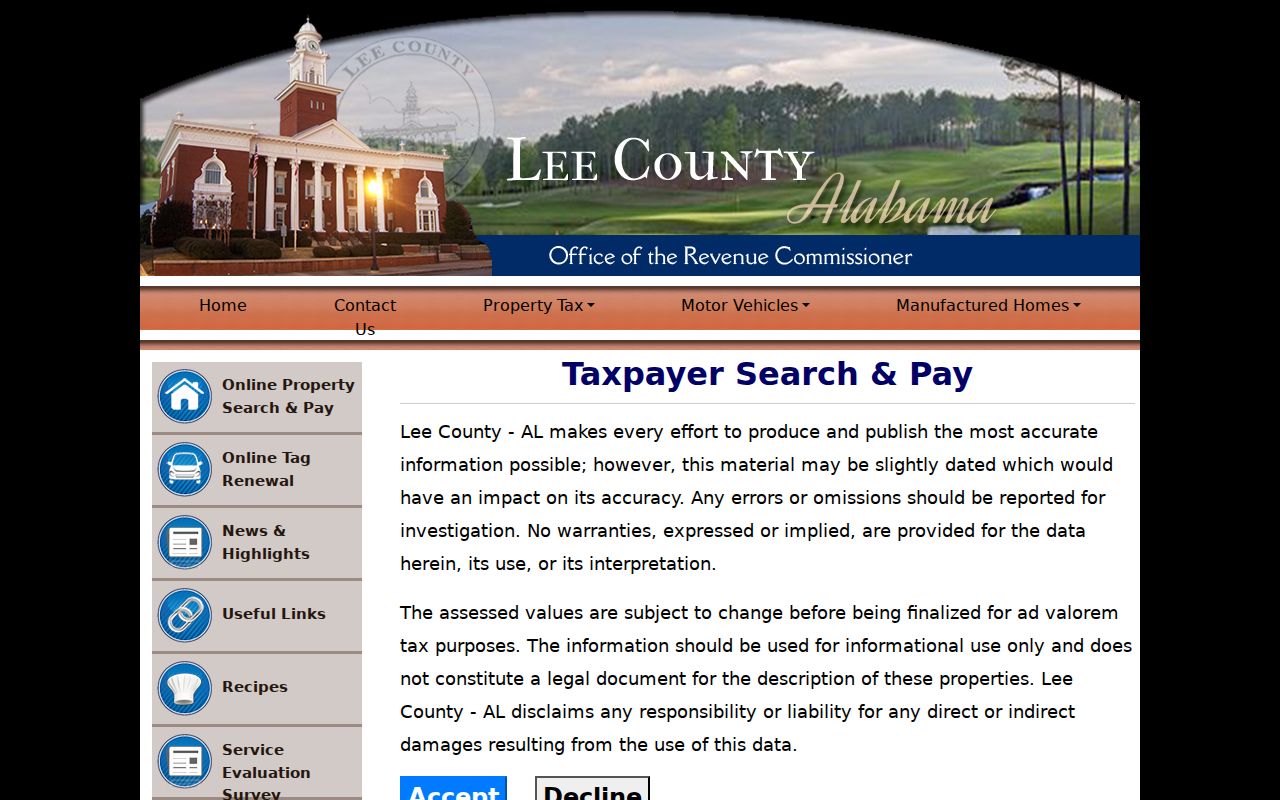
The warning makes a date and deed check essential.
Recent sales can outrun the roll. The newest matching recorded deed is stronger evidence than an older tax-owner label.
Use owner information for lawful property matters only. A mailing line is not an invitation to visit. Never stalk or harass anyone.
Lee Probate offers several routes to a deed. In person, a requester can use viewing stations and ask staff to locate an instrument by name. A copy request may be mailed or delivered. Book and page numbers plus the recording date speed the search. The schedule lists a $5 index fee and $3 per page, with added-name and reference charges on top. Confirm cost and turnaround at 334-745-9761.
Label every piece of evidence by its source. TAX-ROLL points to a Revenue field and its year. RECORDED points to the Probate instrument itself. GIS-OVERLAY points to a map attribute. These labels keep a mailing address, an owner field, and a grantee from blending into one shaky claim.
Keep each contact tied to a clear, legitimate property question. Respect protected-address procedures. Stop if a request would risk personal harm.